
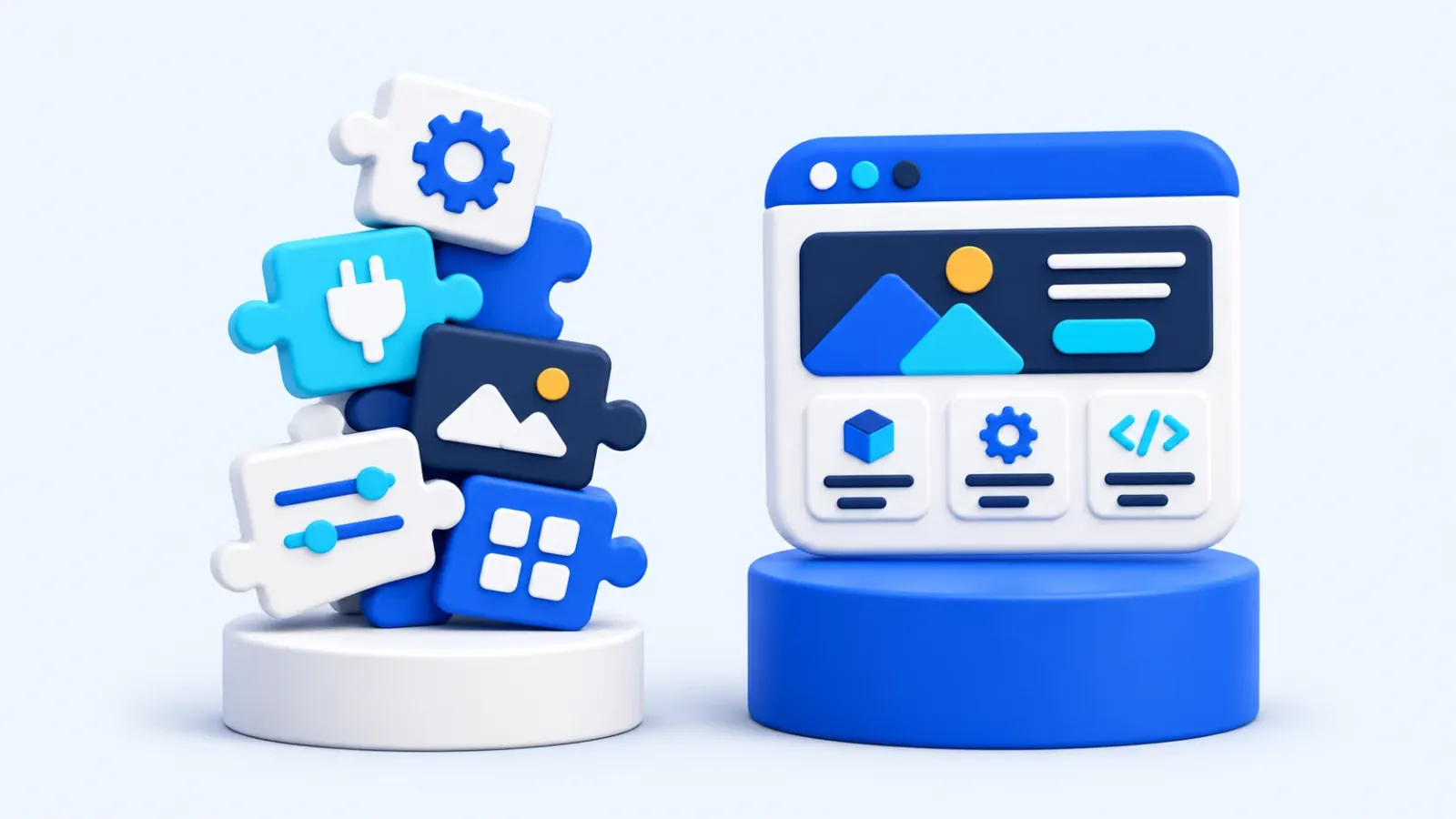
"Should we use WordPress or go custom?" is one of the first questions we hear, and it is usually framed as a choice between two things. In practice there are three, and most of the confusion comes from treating the first two as the same.
- WordPress with a bought theme and a page builder. Fast to start, cheap up front, heavy to run.
- Custom-designed WordPress. A design made for your business, built as a lean WordPress theme your team can edit.
- Fully custom, often headless. A front end written from scratch — we use Next.js — with content in a CMS of your choice.
WordPress runs a large share of the web — roughly four in ten sites by W3Techs' count — so "WordPress" on its own tells you almost nothing about how a site will perform. How it is built tells you everything.
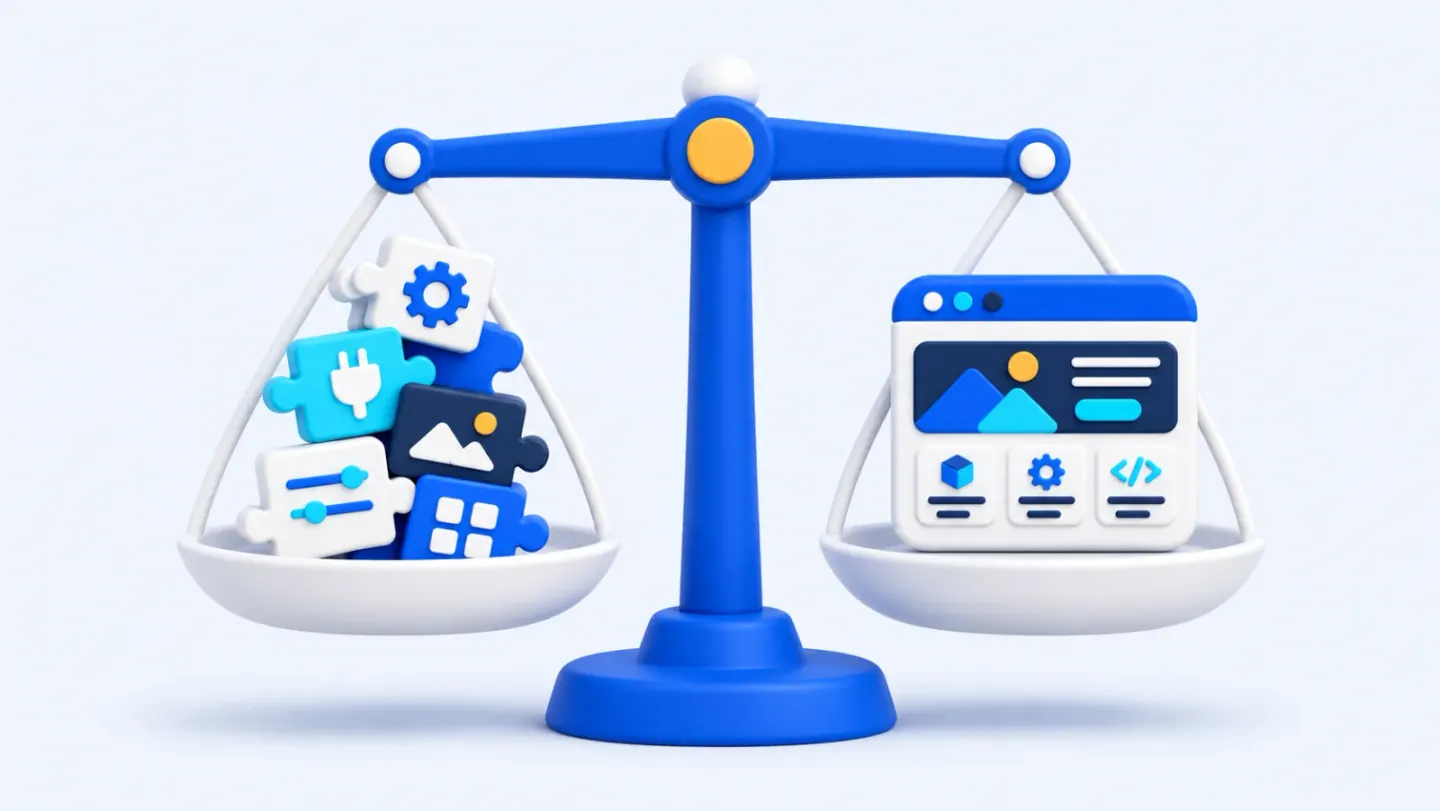
Option one: theme and page builder
A purchased theme plus a drag-and-drop builder gets a site live quickly and lets anyone move blocks around. The cost shows up later: every page loads the builder's styles and scripts whether it uses them or not, plugins accumulate, and each update is a small risk. We measured the difference in the real cost of a page builder.
Choose it when budget is the deciding constraint, the site is not your main sales channel, and you accept a rebuild in two or three years.
Option two: custom-designed WordPress
The design is made for your buyers and your content, then built as a lean theme with only the blocks you need. Your team still edits in the WordPress dashboard they know; the site just does not carry a builder's weight. This is what our Launch and Growth tiers build by default, because it is the best balance of cost, speed and editability for most service businesses.
Choose it when the site has to rank and convert, your team will publish regularly, and you want to own a site that stays fast without specialist help.
Option three: fully custom or headless
A front end written from scratch, with content managed separately. It is the fastest and most flexible option, and the one that integrates most cleanly with other systems. It also costs more, and changes to page layouts need a developer rather than an editor. See headless Next.js development for when we recommend it.
Choose it when you have integrations, a large content inventory, demanding performance targets, or a product that is the website.
WordPress is not slow and custom is not expensive. Bolted-on is slow, and unscoped is expensive.
Side by side
Up-front cost
Theme and builder is cheapest; custom-designed WordPress sits in the middle; fully custom costs the most. The gap between the last two narrows when there are integrations, because those are custom work on any platform.
Speed
Fully custom is fastest by default. Custom-designed WordPress can comfortably pass Core Web Vitals if it is built lean. Builder sites can pass too, but it takes ongoing effort, and the ceiling is lower.
SEO
All three can rank. What matters is clean HTML, sensible headings, structured data, fast pages and the right page for each search — none of which comes from the platform name. Builders tend to make the first two harder.
Who can edit it
WordPress, either kind, wins for day-to-day editing by non-technical teams. A headless site can be just as easy to edit, but only if the content model is designed for it.
Long-term cost
Builder sites usually need a rebuild sooner. Custom-designed WordPress needs routine updates. Custom code needs fewer updates but a developer for layout changes.
Our recommendation, most of the time
For a service business that wants a site that ranks, converts and can be edited by the team: custom-designed WordPress. For e-commerce, heavy integrations or a content operation at scale: talk to us about custom. And if you already have a builder site that has slowed down, it is often a redesign rather than a platform change that you need.
Comments
Loading…
Leave a comment
Read before it appears, so it will not show up straight away. Your email is not published — it is only so we can reply to you directly.